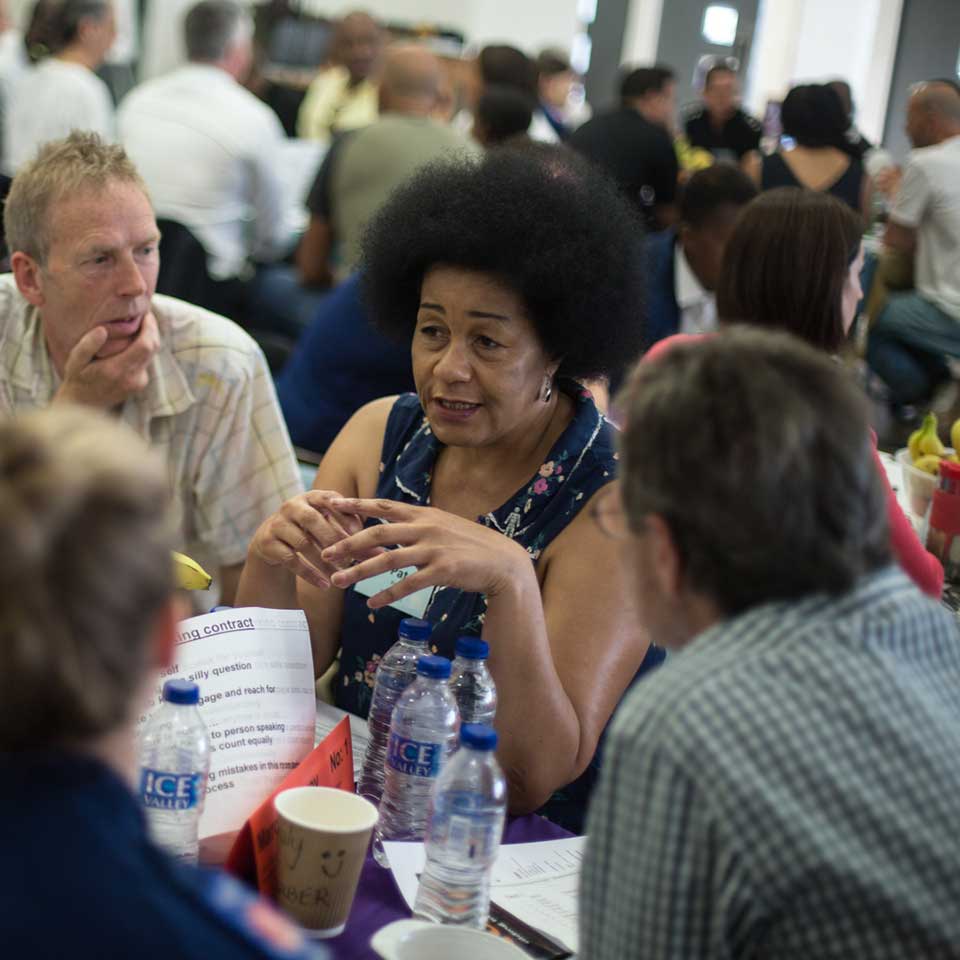
Every organisation is a meeting place of differences. Generations with different expectations of work. Colleagues from different cultures, faiths and backgrounds. Departments with competing priorities. People who vote differently, think differently and solve problems differently.
None of this is new. What has changed is how visible these differences have become, and how much they now shape whether a team performs well or quietly falls apart.
Difference is inevitable. Strength is a choice.
Many organisations still treat difference as something to be managed: a compliance requirement, a policy to sign, an annual training module to complete. That approach keeps people safe from the worst outcomes, but it rarely unlocks the best ones.
Leading across difference asks something more of leaders. It asks them to see difference as a source of better ideas, sharper decisions and stronger relationships, and to build the skills that make that possible.
What leading across difference looks like in practice
In our experience working with leaders across the public and private sectors, the leaders who do this well share a few habits.
They get curious before they get certain. When a colleague sees something differently, they ask what experience has shaped that view before deciding whether it is right or wrong.
They notice who is not speaking. Meetings often reflect the confidence of the loudest voices rather than the quality of the best ideas. Inclusive leaders actively create space for people who are quieter, newer or further from power.
They name tension early. Unspoken disagreement does not disappear. It leaks out as disengagement, gossip and resistance to change. Good leaders bring it into the room while it is still small enough to work with.
They model learning. Leaders who are willing to say “I got that wrong” or “I had not considered that” make it far easier for everyone else to do the same.
Why it matters for performance
Teams that can work well across difference tend to make better decisions, because they test ideas against a wider range of perspectives. They adapt to change more easily, because people trust each other enough to raise concerns. And they keep good people for longer, because those people feel seen and valued rather than tolerated.
The opposite is also true. When difference is avoided or suppressed, organisations lose ideas they never hear, talent that quietly walks away, and the trust that every change programme depends on.
Where to start
Leading across difference is a skill, and like any skill it can be learned and practised. A good starting point is to ask three questions of your own team:
- Whose perspective do we hear most often, and whose do we rarely hear?
- What disagreements are we avoiding?
- When someone raises a difficult issue, what happens next?
The honest answers will tell you a great deal about where your team’s strength lies, and where it is being held back.
At NCBI Training, our Inclusive Leadership programmes give leaders practical tools to turn difference into one of their greatest operational strengths. If you would like to explore what that could look like for your organisation, we would be glad to start the conversation.